
Which one suits the job in front of you. Both are the right answer sometimes, and the deciding factors are the fault itself, the vehicle, and where it happens to be parked right now.
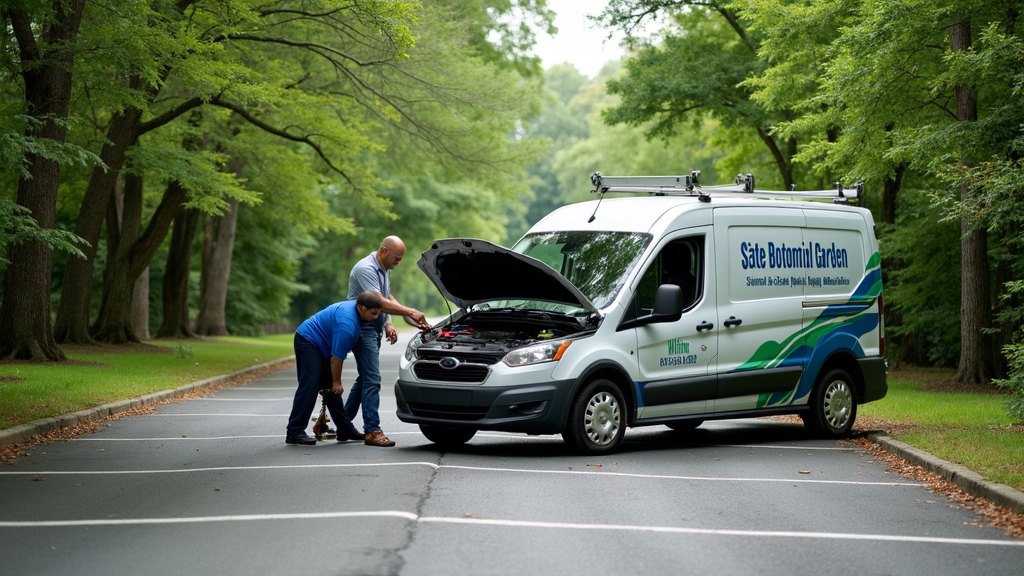
A shop has equipment a van cannot carry: a lift, a press, an alignment rack, and somewhere dry to leave a car stripped overnight. A mobile mechanic has something a shop cannot offer, which is that the car does not have to get there first. On a vehicle that will not start, that difference is the cost of a tow before any diagnosis has even happened.
Most of what goes wrong with a car falls into the second category. Batteries, starters, alternators, brakes, cooling systems, air conditioning, servicing and electrical faults are all finished where the vehicle sits, usually at one visit.
There is no building to pay for, no service advisor between you and the person doing the work, and on a car that will not start there is no tow at the front of the bill. You also lose the hidden costs that never appear on an invoice: the morning off work, the ride home from the shop, the courtesy car, and the day the car sits in a queue before anyone looks at it.
Anything needing the car held at height for hours, pressed apart, welded or aligned on a rack belongs in a shop, and so does a job that will run over several days. Major engine and transmission work is the clearest example. Some programming and security work also needs manufacturer equipment that only a dealer holds.
A shop visit is rarely just the repair time. It is the drop-off, the wait for a bay, the call back, and the collection. On-site work is the appointment itself, at your house or your workplace, with the car staying where it already is. For a battery or a brake job the difference is most of a day.
This is the part worth weighing. On site, the fault is explained with the car in front of you and you can see what is being done. The limit is the equipment: if the job genuinely needs a lift, having it done badly without one is far worse than driving to a shop. A mechanic telling you that is giving you the right answer, not losing the work.
If the car will not start, will not move safely, or the job is a battery, a starter, an alternator, brakes, a cooling system, air conditioning, servicing or an electrical fault, having someone come to it is almost always quicker and cheaper. If the job needs a lift, a press, an alignment rack or welding, or it is major engine and transmission work, a shop is the right call. If you are not sure which it is, describing the symptom gets you a straight answer either way.
It does not have to be one or the other for good. Plenty of drivers around Athens use on-site work for everything routine, which is most of the year, and a shop for the occasional big job that genuinely needs one. That is a sensible arrangement, and it means the diagnosis has usually already been done by the time a shop sees the car, which saves paying for it twice.
Whichever route you take, knowing what the job actually involves puts you in a better position. Mechanic Athens GA sets out the core mechanical work and what each job means in practice.
Tell us what the car is doing and where it is parked, and you will be told honestly which route fits. Call 706-940-4120.